
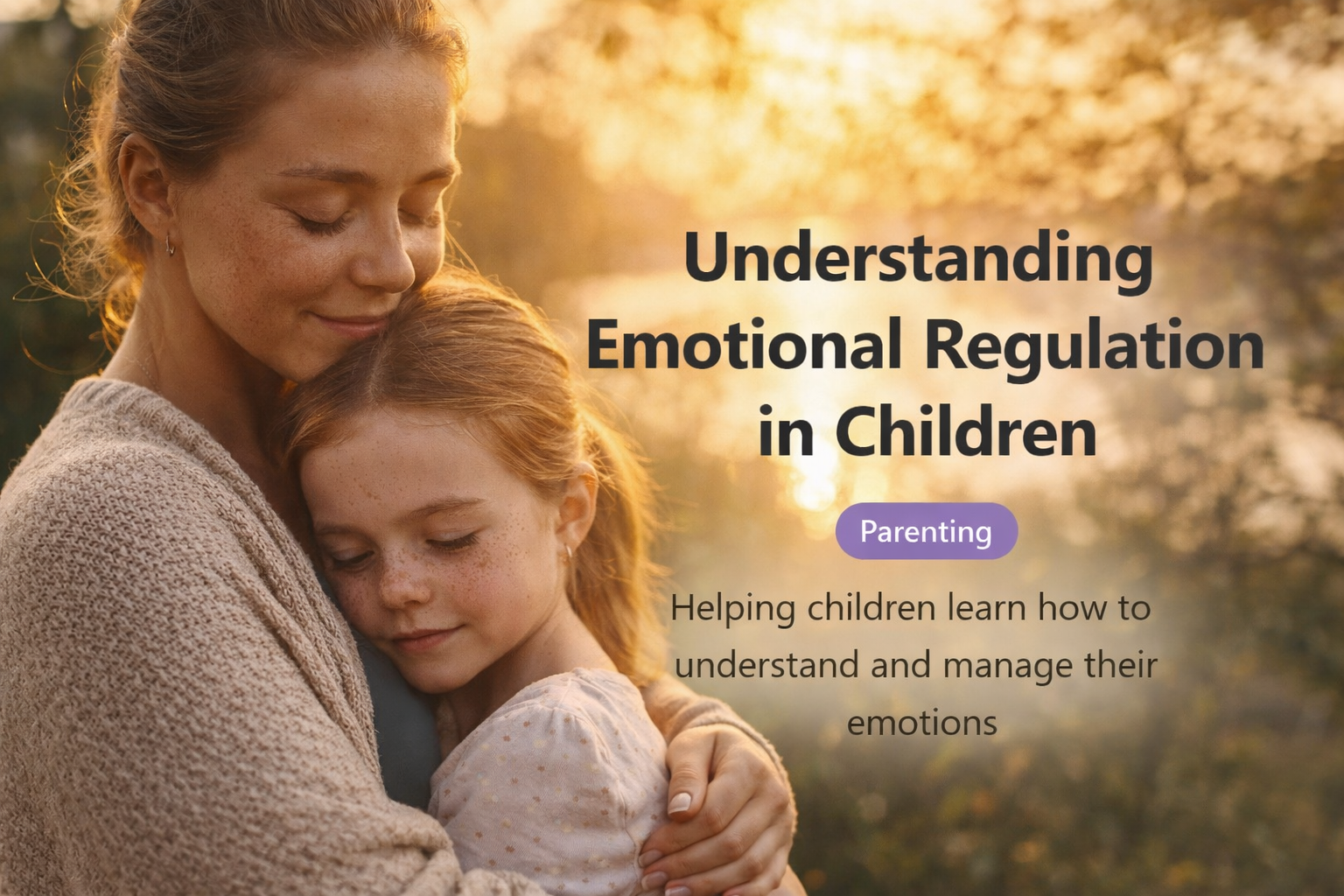
Understanding Emotional Regulation in Children
Arete
Founder & Creator of Emotions
Children experience emotions deeply, but they are not born knowing how to manage them. Emotional regulation is a skill that develops over time, and it plays a critical role in a child's mental wellbeing, relationships, and ability to navigate life.
As parents, caregivers, and educators, our role is not to control children's emotions, but to help them understand what they feel and guide them in responding to those feelings in healthy ways.
When children learn emotional regulation early, they develop stronger resilience, healthier relationships, and greater confidence in themselves.
What Is Emotional Regulation?
Emotional regulation refers to a child's ability to recognise their emotions, understand what those emotions mean, and respond in a balanced and appropriate way.
For young children, emotions can feel overwhelming. They may not yet have the language or self-awareness to explain what they are experiencing. This is why a child might cry, shout, withdraw, or act out when they feel frustrated, scared, or overstimulated.
Research in developmental psychology shows that children learn emotional regulation primarily through co-regulation. This means they learn by observing and experiencing calm responses from the adults around them.
In simple terms, children learn how to manage emotions by being supported through them first.
Why Emotional Regulation Is So Important
Emotional regulation affects nearly every part of a child's development.
Children who are supported in understanding their emotions are more likely to: develop stronger social skills; communicate their feelings more clearly; build resilience during challenges; concentrate better in learning environments; form healthier friendships and relationships.
Without guidance, children may struggle to process difficult emotions and instead express them through behaviour such as aggression, withdrawal, or anxiety.
This does not mean a child is "misbehaving." Often it simply means they do not yet know how to process what they feel.
The Brain and Emotions
In childhood, the part of the brain responsible for emotional responses develops earlier than the part responsible for logical reasoning and self-control.
This means when children feel overwhelmed, their emotional brain reacts before their thinking brain can step in.
Understanding this helps adults respond with patience. When a child is upset, they are not choosing chaos—they are often experiencing emotions that feel too big to manage on their own.
Calm support helps the child's nervous system settle, allowing them to return to a balanced state.
How Adults Can Support Emotional Regulation
Helping children regulate emotions does not require perfection. It requires consistency, patience, and connection.
Help children name their feelings; model calm behaviour; create safe spaces for expression; teach simple calming techniques; focus on connection before correction.
When children learn that emotions are natural, manageable, and safe to express, they grow into individuals who are more self-aware, resilient, and compassionate toward others.
Supporting emotional regulation is not about eliminating difficult feelings. It is about giving children the tools and reassurance they need to move through those feelings with confidence.
And often, the greatest tool we can offer them is our presence, patience, and understanding.